

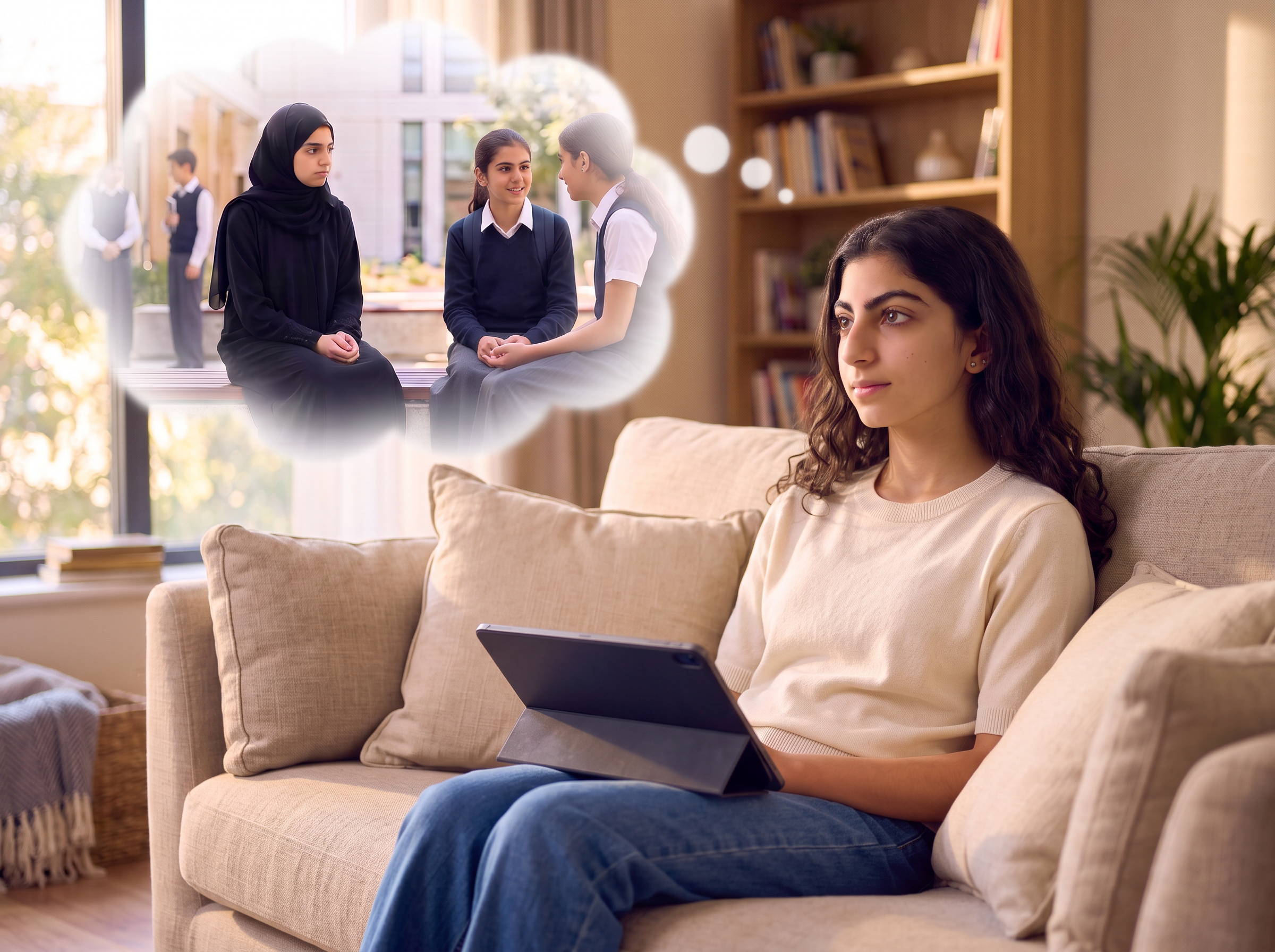
A moment may last only a few minutes, but what students learn from it can stay with them. This article explores how reflection helps students understand their emotions, reconsider their choices and recognise their impact on others. Through repeated practice, students can develop greater self-awareness and learn to make more thoughtful decisions in everyday life.
Reflection in Practice: When a Moment Becomes an Opportunity to Learn
How reflection
helps students understand their feelings, explore their choices and learn from
experience.
Every day is filled
with moments.
We speak. We disagree.
We succeed. We make mistakes. We feel. We choose.
And then we move on.
But experiencing
something does not necessarily mean we have learnt from it.
Sometimes, the most
important learning begins after the moment has passed.
When we stop and ask
ourselves: What happened? And why?
That is where
reflection begins.
Not simply remembering
what happened, but looking a little closer.
What was I feeling?
Why did I respond
that way?
How did my choice
affect someone else?
What might I do
differently next time?
Reflection cannot
change what happened. But it can change what we understand about it.
And that understanding
can turn an ordinary experience into something we carry into the next one.
For a student, it
might begin with something small.
A comment that hurt.
A disagreement with a
friend.
A moment of feeling
left out.
A decision they were
unsure how to make.
The situation may be
over in minutes. Yet what the student felt, thought and chose can still be
worth exploring.
Given a safe space to
reflect, students can begin to recognise the connection between their emotions,
their responses and the consequences of their choices.
A passing moment
becomes an opportunity to build awareness and practise a skill.
But reflection is not
about telling students what they should have done.
Nor is it about
finding the perfect answer.
Sometimes, the most
valuable thing an adult can offer is not an answer at all.
It is a question.
A School Supervisor
who listens without immediately judging. Who helps a student look at a
situation from another perspective. Who gives them room to discover something
about themselves.
Because the purpose is
not to think for the student.
It is to help the
student learn to think for themselves.
And with practice,
something important can begin to change.
The questions that
once came from an adult gradually become questions students ask themselves.
What am I feeling
right now?
Why am I reacting
this way?
What might happen
if I make this choice?
Is there another
way?
That is when
reflection begins to move beyond an activity.
It becomes part of how
students approach everyday situations and decisions.
Not a search for
mistakes.
Not a judgement of
what they did.
But an opportunity to
understand the relationship between what they think, what they feel, what
they choose and what follows.
To pause before
responding.
To understand before
judging.
To reconsider a
choice.
To learn from
experience.
None of this happens
in a single conversation or one experience.
It develops over time,
through repeated opportunities to notice, question and reflect.
At AnaAkhtar,
reflection is part of the student journey. After exploring real-life situations
and making choices, students have the opportunity to express their thoughts in
their own words or voice, connecting what they experience with what they are
learning about themselves.
The value is not
simply in completing a reflection.
It is in what students
may begin to notice the next time a similar situation arises.
Because the moment
itself is only one part of learning.
Reflection is the
bridge between experience and understanding. Between awareness and action.
Between a skill we recognise and a choice we make.
The moment may be
over. But the learning can begin there.
By: AnaAkhtar
